Stone guide · 8 min
Patagonia Granite Slabs: Selection, Thickness & Buying Guide
How to compare Patagonia Granite slabs, confirm current lots, choose thickness and plan fabrication for international projects.
Updated 2026-07-14 · Reviewed by TM Stone sourcing & fabrication team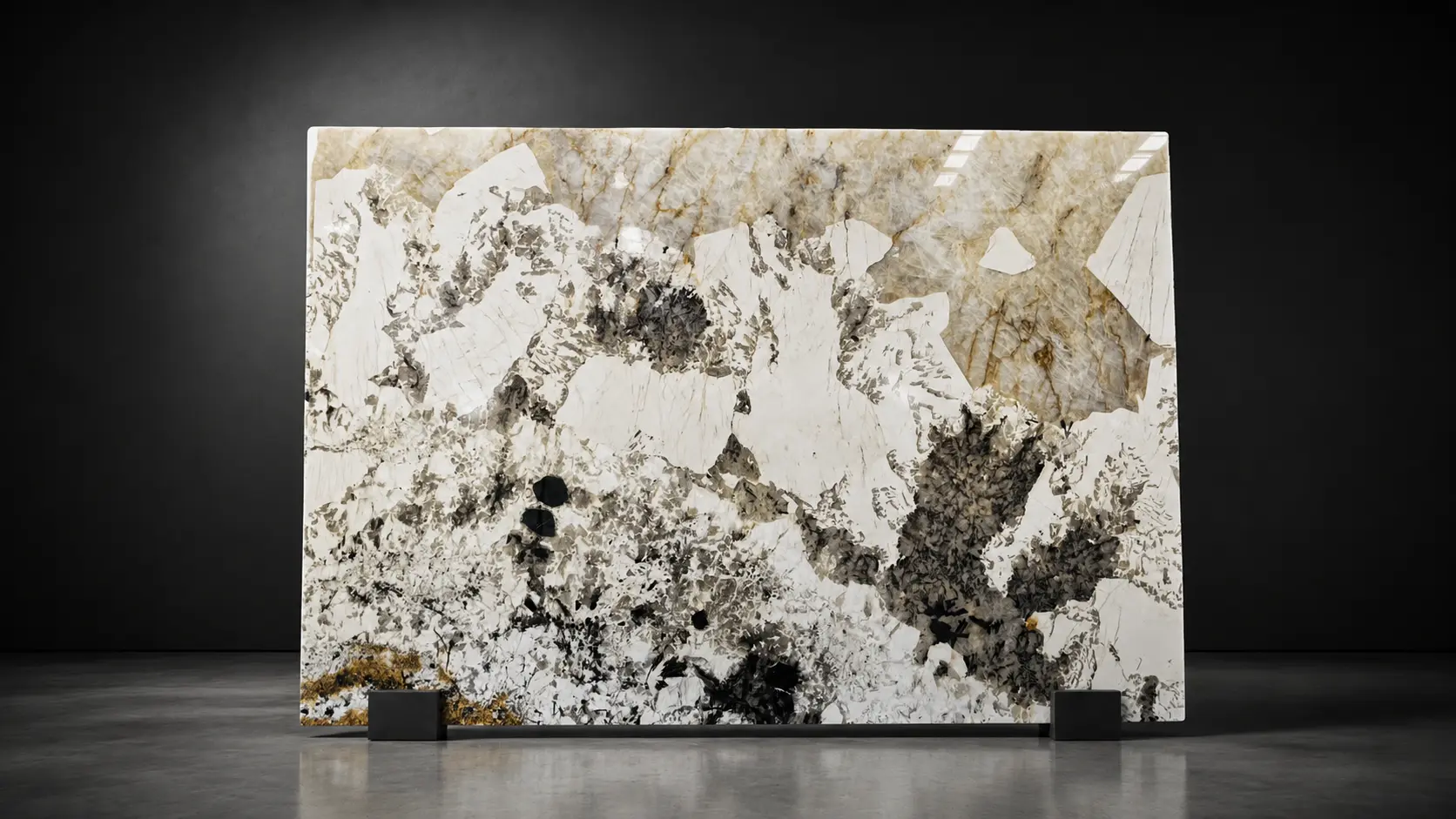
Patagonia Granite is purchased slab by slab. Its oversized crystals, translucent areas and contrasting mineral fields make every block—and every cut—different. The safest buying process begins with real slab photographs and ends with an approved layout.
What makes Patagonia Granite different?
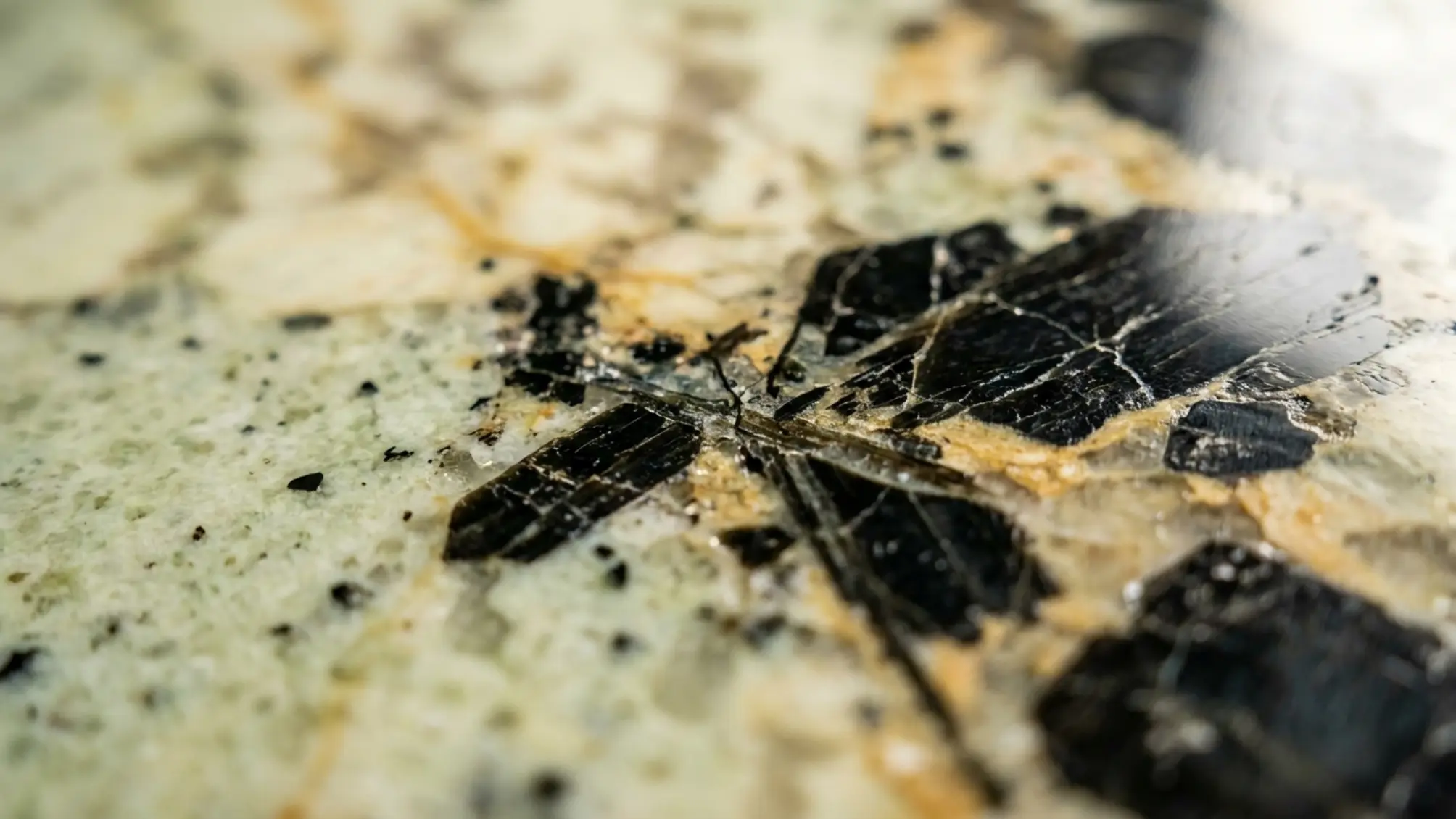
Patagonia is a dramatic Brazilian pegmatitic granite. Instead of a fine, repeating grain, it often contains very large feldspar and quartz crystals, dark mineral fragments and areas that may transmit light. This is why it works so well for signature islands, backlit walls and collectible tables—and why a small sample cannot represent a full slab.
- Oversized mineral crystals and natural void-like movement
- Strong variation between slabs and bundles
- Potentially translucent quartz areas that should be light-tested
- Best results when the final cuts are composed before fabrication
How to select a current slab lot
Ask for straight-on photographs of every candidate slab, close-up videos, available dimensions, thickness, finish and lot or bundle references. For multi-slab projects, compare the slabs together. Confirm whether consecutive slabs are available if bookmatching or visual continuity matters.
- Mark the focal zone before placing sinks or cooktops
- Review seams, waterfall returns and edge direction
- Reserve enough material for breakage and pattern alignment
- Confirm the exact slabs again before cutting
18 mm, 20 mm or 30 mm?
Thickness is a design and engineering decision, not simply a quality rank. Twenty-millimetre material is common for wall panels and contemporary built-up edges; 30 mm creates a heavier visual line and may suit freestanding islands. Final support, span and reinforcement must be reviewed by the local fabricator or project engineer.
What should a supplier quotation include?
A useful quotation separates slab material, fabrication, packing and freight assumptions. Send drawings or a cut list whenever possible. For custom work, identify finished dimensions, edge profiles, cutouts, surface finish, visible faces, destination port and target delivery date.
Quick comparison
| Decision | What to confirm | Why it matters |
|---|---|---|
| Slab face | Exact slab photos and lot | Patagonia does not repeat |
| Thickness | 18, 20, 30 mm or custom | Affects weight, edge design and support |
| Finish | Polished, honed or leathered sample | Changes color, reflection and care |
| Layout | Scaled cuts, seams and focal zones | Protects the strongest composition |
| Scope | Slabs only or finished fabrication | Creates a comparable quotation |
Frequently asked questions
Are the slabs shown live inventory?
They are representative real slab selections. Lots change quickly, so contact TM Stone for current photos, quantities and updated dimensions.
Can Patagonia Granite be backlit?
Some quartz-rich areas can transmit light, but each slab needs a lighting test and a panel/structure plan before fabrication.
Can multiple slabs be bookmatched?
Sometimes. Availability depends on consecutive cuts from the same block, so request bundle information and confirm the proposed layout.
Technical care guidance is aligned with the Natural Stone Institute consumer care guidance. Natural stone varies; always confirm performance, treatment and installation requirements for the actual material and project.