Stone guide · 7 min
Patagonia Granite Countertops: Is It Right for a Kitchen?
A practical guide to Patagonia Granite kitchen islands, countertop performance, layout, finish, care and fabrication decisions.
Updated 2026-07-14 · Reviewed by TM Stone sourcing & fabrication team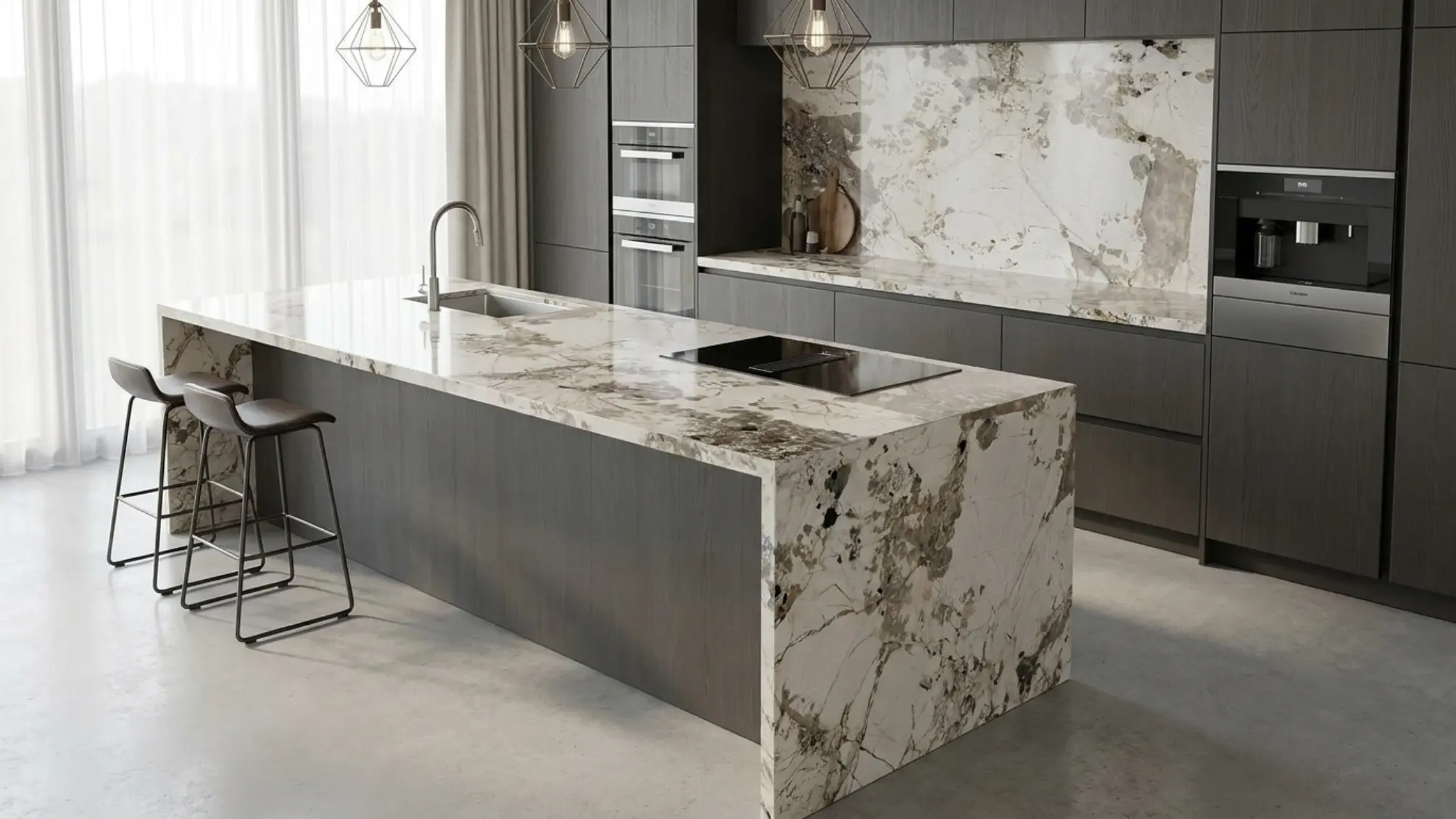
Patagonia Granite can create an extraordinary kitchen, but it should be treated as a composed natural surface rather than a repeatable countertop color. The strongest projects coordinate slab choice, support, seams, cutouts and finish from the beginning.
Where it performs best
Granite is widely used on heavily used surfaces because of its durability and abrasion resistance. Patagonia offers the same natural-stone practicality with a far more expressive mineral scale. It is especially effective on waterfall islands, full-height backsplashes and large focal counters.
- Island faces with uninterrupted crystal fields
- Backsplashes cut from the same or adjacent slab
- Bar tops and dining tables with a single focal composition
- Feature panels where optional backlighting can be tested
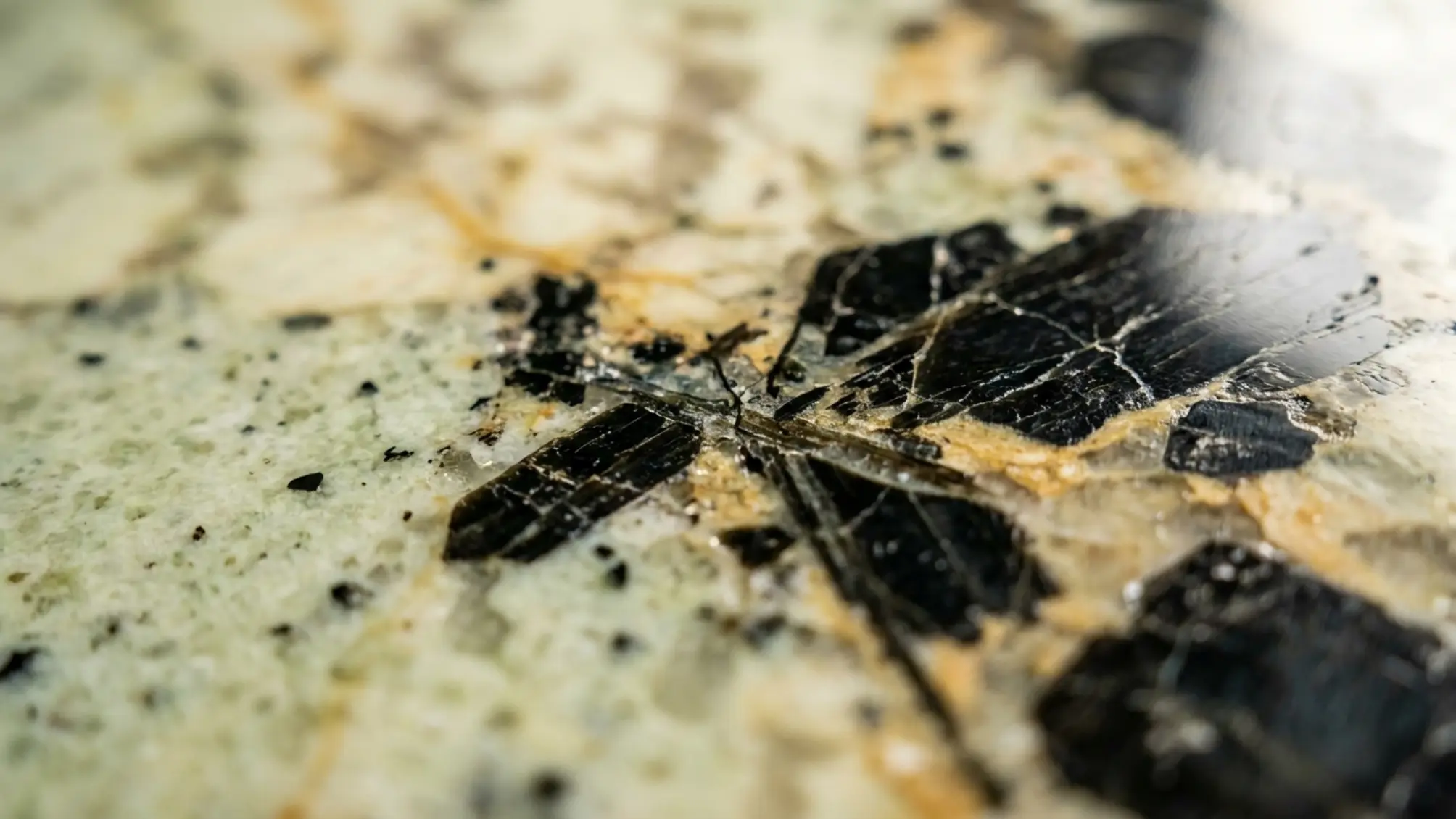
Plan the slab before the room
Start with a scaled drawing over the slab photograph. Place sinks and cooktops away from the most valuable focal crystals when possible. Review every seam and return. A beautiful slab can lose its impact when the layout is decided only after templating.
Polished, honed or leathered?
A polished finish strengthens color, contrast and reflectivity. Honed surfaces feel calmer and reduce glare, while leathered finishes add tactile depth. The right choice depends on the actual slab, expected use and cleaning routine. Request a finished sample or test area before approving a large order.
Care without overpromising
Use pH-neutral stone cleaner or mild soap and water, blot spills promptly and use trivets and cutting boards. A penetrating treatment may improve stain resistance, but it does not make stone stain-proof. Ask the fabricator which treatment was applied and follow the product instructions.
Quick comparison
| Decision | What to confirm | Why it matters |
|---|---|---|
| Slab face | Exact slab photos and lot | Patagonia does not repeat |
| Thickness | 18, 20, 30 mm or custom | Affects weight, edge design and support |
| Finish | Polished, honed or leathered sample | Changes color, reflection and care |
| Layout | Scaled cuts, seams and focal zones | Protects the strongest composition |
| Scope | Slabs only or finished fabrication | Creates a comparable quotation |
Frequently asked questions
Is Patagonia Granite durable enough for daily kitchens?
Granite is commonly selected for kitchens and other heavily used surfaces. Proper fabrication, support, installation and routine care remain essential.
Will every countertop look like the sample?
No. Large-scale natural variation is a defining feature. Approve the exact slab and layout, not only a hand sample.
Should it be sealed?
The need depends on the slab and factory treatment. A suitable impregnator can improve stain resistance; consult the supplier and sealer manufacturer.
Technical care guidance is aligned with the Natural Stone Institute consumer care guidance. Natural stone varies; always confirm performance, treatment and installation requirements for the actual material and project.